India and New Zealand: A New Era of Trade Relations
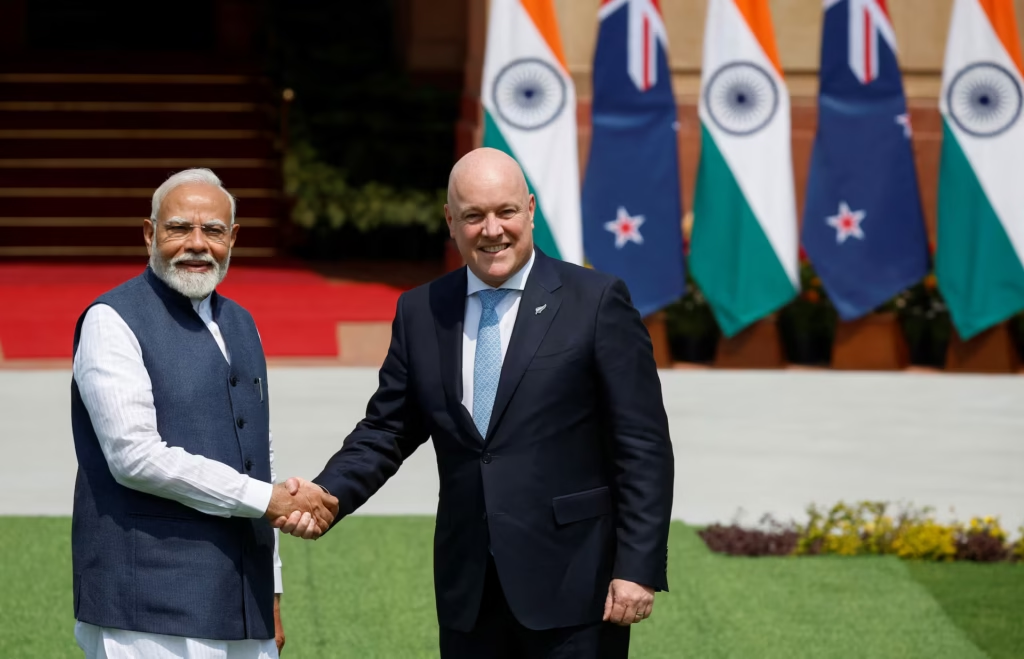
Have you ever wondered why some of your favorite products from overseas are so expensive? Often, it is because of “trade barriers” and high taxes called tariffs. But today, there is a massive “win” for shoppers and businesses in both India and New Zealand. On Monday, December 22, 2025, the two nations officially announced the conclusion of a historic Free Trade Agreement (FTA). Trade Relations
This deal was finished in a record-breaking nine months, showing a very strong “political will” to work together. It marks a huge shift in how these two friends will trade, invest, and share their talents. In this article, we will look at what this agreement means for you and the global economy.
A Huge Boost for Indian Exports
The first big news is that New Zealand has agreed to eliminate tariffs on 100% of its products from India. This means that things like Indian textiles, jewelry, and leather goods will soon be much cheaper to buy in New Zealand. It is a “gold mine” for Indian artisans and small business owners who want to sell their work to 1.4 billion people.
Because these goods will be “duty-free,” they will be more competitive against products from other countries. This part of the deal is expected to create thousands of jobs in India’s labor-intensive industries. It is a strategic move that helps India become a “global manufacturing hub” for the world.
New Zealand Gains Access to 1.4 Billion Consumers
For New Zealand, this agreement is a “once-in-a-generation” opportunity to reach India’s rapidly expanding middle class. The deal will eliminate or sharply reduce tariffs on 95% of New Zealand’s exports to India. This includes immediate duty-free access for things like sheep meat, wool, and coal.
For the first time, New Zealand exporters will be on an equal or even better footing than their competitors. Prime Minister Christopher Luxon said the deal would “accelerate progress” toward doubling the country’s exports over the next ten years. It opens a massive door to the world’s most populous country and one of its fastest-growing economies.

Protecting the Heart of Indian Agriculture
One of the most sensitive parts of the talks was the “dairy and farming” sector. Many Indian farmers were worried that cheap imports from New Zealand might hurt their own businesses. To solve this, the agreement includes a “calibrated” approach to protect Indian subsistence farmers.
While some high-end New Zealand products like kiwifruit and apples will get easier access, main dairy products like milk and cheese are excluded from the deal. This “safety net” ensures that India’s domestic dairy cooperatives stay strong and secure. It is a balanced solution that respects the needs of farmers in both nations while still allowing for new growth.
A $20 Billion Investment in India’s Future
This trade deal is not just about moving boxes of goods; it is also about moving “gold” and money. New Zealand has committed to facilitating $20 billion in investment into India over the next 15 years. This massive amount of money will go toward building infrastructure, supporting innovation, and creating new jobs under the “Make in India” vision.
To make sure this promise is kept, the deal includes a “rebalancing mechanism” that can suspend benefits if the investment goals aren’t met. This “investment-led growth” is a key part of the 2025 strategy to make India a “Viksit Bharat” (Developed India) by 2047.
Faster Access for Medicines and Tech
If you work in healthcare or technology, this deal has some very good news for you. The agreement will help Indian pharmaceutical companies by allowing faster regulatory approvals in New Zealand. New Zealand will now accept inspection reports from trusted global regulators like the US FDA and UK MHRA.
This “shortcut” reduces duplicative checks and lowers costs for making life-saving medicines. Additionally, the deal focuses on the “digital future” by encouraging cooperation in FinTech and digital payments like UPI. This will make it much easier for businesses to pay each other across borders without any “hiccups” or delays.

Opening Doors for Students and Professionals
Perhaps the most exciting part for young people is the new “talent and mobility” chapter. The agreement creates a new Temporary Employment Entry Visa for 5,000 Indian professionals every year. This includes high-demand jobs like IT, engineering, and healthcare, but also traditional roles like yoga instructors and Indian chefs.
For students, the deal provides “post-study work visas” for up to four years for doctoral scholars and three years for STEM graduates. This “living bridge” of people will help both countries share their skills and grow their economies together. It gives the youth of both nations a chance to “learn, work, and grow” on a global stage.
The Return of the “Kiwifruit and Wine”
If you love fresh fruit or a good glass of wine, you will be happy to hear about the new “market access.” New Zealand has secured a “world-first” duty-free quota for kiwifruit that is nearly four times its current export level. This means more high-quality fruit will be available in Indian stores at better prices.
Wine tariffs will also see a “sharp cut” from 150% down to as low as 25% over the next ten years. Even the famous mānuka honey will see its tariff drop from 66% to just 16.5%. These “sweet” deals show that India is becoming a more open and exciting market for luxury goods from around the world.
A Record-Breaking Negotiation Period
The speed at which this deal was finished is truly “stunning” in the world of international politics. Negotiations were only launched on March 16, 2025, during Prime Minister Luxon’s visit to New Delhi. In just nine months, the two teams held five formal rounds and dozens of virtual meetings to iron out the details.
Commerce Minister Piyush Goyal called it one of India’s “fastest-concluded FTAs with a developed country.” This “high-speed” success reflects the “strong political will” of both Prime Minister Modi and Prime Minister Luxon. It proves that when two countries have a “shared ambition,” they can move mountains in a very short time.

What Happens in 2026?
As 2025 comes to a close, the focus now moves to the “official signing” and implementation of the deal. The agreement is expected to be signed in the first half of 2026 after it goes through legal checks in both countries. In New Zealand, the government still needs to get final approval from Parliament, where some coalition partners have expressed “concerns” about immigration.
However, the overall support for the deal is very high among business groups and the public. Once it is fully running, the goal is to double bilateral trade to $4 billion by 2030. It is a bold target, but with this “landmark” agreement in place, it looks very achievable. Trade Relations
A Strategic Partnership for the Future Trade Relations
In conclusion, the conclusion of the India-New Zealand Free Trade Agreement is a historic moment for both nations. It is a “new generation” deal that focuses on people, talent, and sustainable growth. From duty-free clothes to cheaper kiwifruit and $20 billion in new investments, the benefits are truly “wide-ranging.” Trade Relations
By balancing the needs of their farmers with the dreams of their innovators, the two countries have created a “win-win” for everyone. As we head into 2026, the relationship between the “Atlas Lions” of Indian trade and the “Kiwis” of New Zealand has never been stronger. It is a bright start to a new era of global partnership and prosperity! Trade Relations
Read More Articles Click Here. Read Previous Articles Click Here.